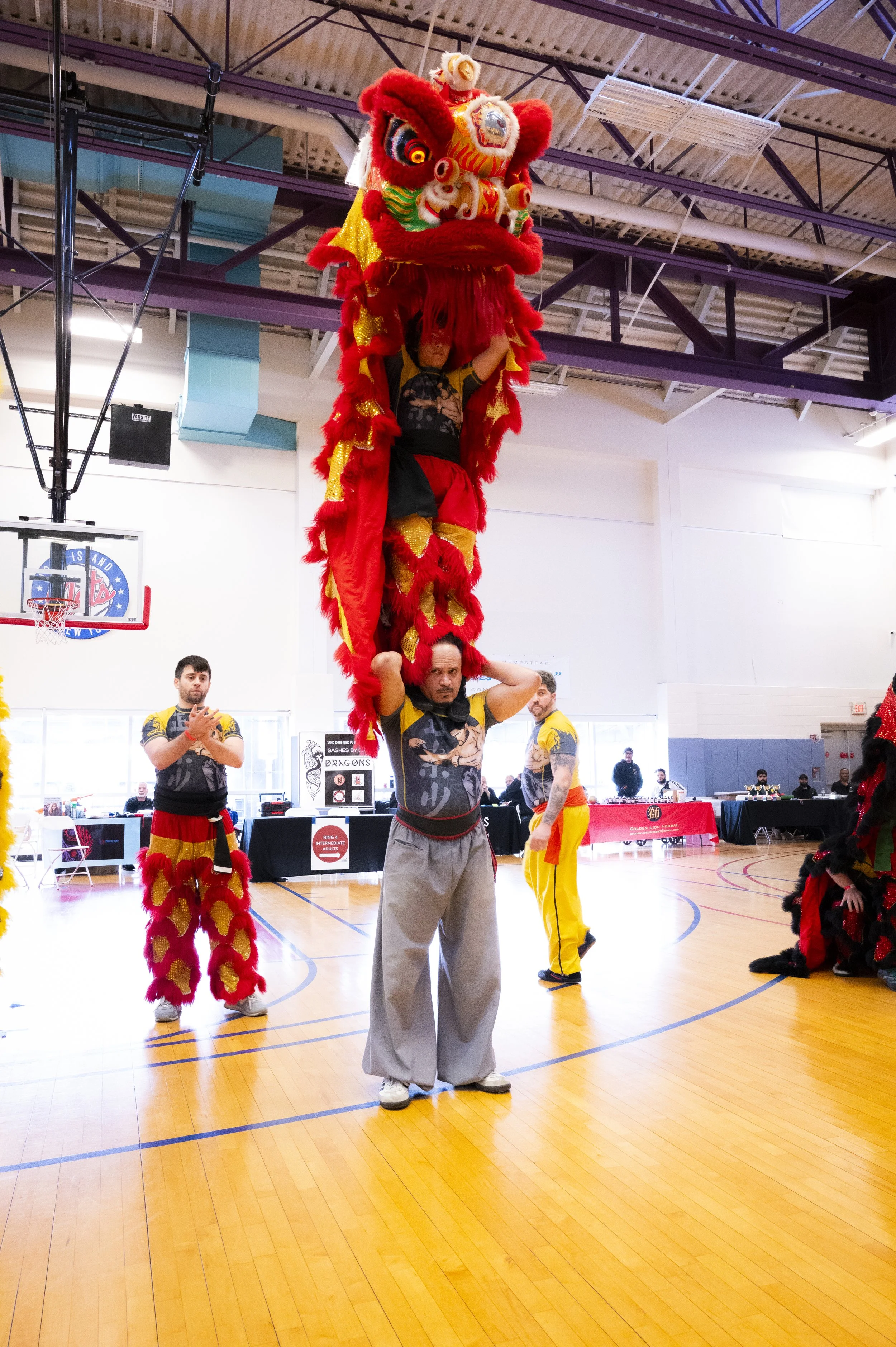
Lion dancers from Authentic Shaolin Kung Fu perform a “stack”, in which the lion “head” stand’s on the “tail’s” thighs, chest, shoulders, or head.
Team Hóngshī 红狮 will be learning traditional lion dancing techniques from Shitaigong Gregg.
Paraphrased from Shitaigong’s website:
“The lion dance, also called the 'lion lantern', is a form of traditional dance performed on joyous festivals and important occasions, such as business grand openings, weddings, and the Spring Festival (Chinese New Year). It is a dance which imitates a lion's various movements and actions, performed by a pair of dancers in a lion costume, accompanied by the music of beating drums, gongs, and cymbals.
It is believed that the lion is an auspicious animal that brings good luck. Therefore, a lion dance is performed to pray for good luck during the Spring Festival or during other celebrations.
The lion dance is an excellent Chinese folk art that has spread across the world. The parading lions run along the streets to bring good will and luck to everyone they meet. They visit stores, restaurants and businesses.
The Lion Dance Troupes are usually accompanied by their "laughing Buddha" buddy. The Buddha wears a mask and robe, and tantalizes the lion with a fan to make him jump, roll around, lie down, etc.
As they wind down the streets and locales, people along the way will “feed” the lions red envelopes with money inside by handing the money through the lion’s mouth. This is supposed to bring good luck and fortune and is considered a donation for the martial arts school setting up the performance.
The Chinese lion dance has close relations to Kung Fu and the dancers are usually martial art members of the school. They practice in the school and train hard to master the skill as one of the disciplines of the martial art. In general, it is seen that if a school has a capable troupe with many 'lions', it demonstrates the success of the school.”
Cost: $50/student